
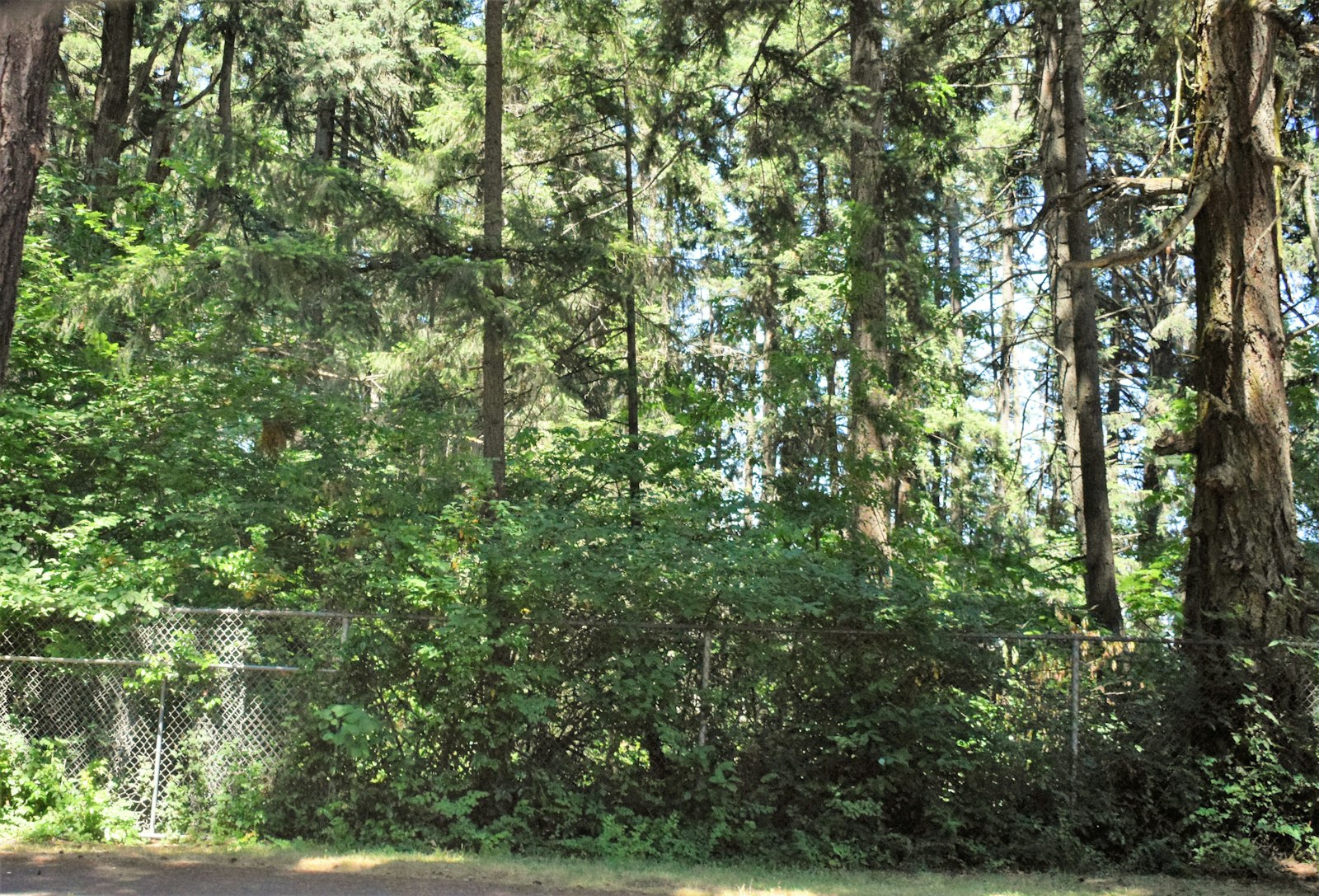
A feasibility study before buying a home site in Kitsap County is a short, independent investigation. It answers one question before you close: can this parcel legally and physically hold the home you want? It checks zoning density, critical areas such as wetlands and steep slopes, septic suitability, well water limits, shoreline rules and legal access. Several of those checks are pass-or-fail. Bluefoot Architecture & Design runs these studies from Poulsbo for buyers across the county.
Kitsap land sells on its trees, its water and its views. Think of the second-growth fir lot outside Silverdale, the bluff above Hood Canal, or the quiet acreage near Kingston. The features that make a parcel appealing are often the ones county code regulates most closely.
A listing that calls a parcel “buildable” is making a marketing claim, not a county determination. The determination comes later, during permit review, when you already own the land.
Our opinion, after walking a lot of Kitsap sites: see the property in February, not September. Kitsap County’s own definition of a wetland includes land that is saturated or covered with water for only part of the year. The dry, level clearing you admired in late summer can look very different after three months of rain.
Every parcel is different, but the same seven questions come up on nearly every Kitsap County home site. This is the checklist we work through:
| Question | Where the answer comes from | Why it can stop or reshape a build |
|---|---|---|
| Zoning and density | Kitsap County Code Title 17 and the county Parcel Search | Rural zones allow as few as one home per 5, 10 or 20 acres |
| Critical areas | Kitsap County Code Title 19 | Wetland, stream and slope buffers can shrink the usable building area |
| Shoreline | Washington’s Shoreline Management Act, RCW 90.58 | Land within 200 feet of the ordinary high water mark is shoreland |
| Septic | A Building Site Application to Kitsap Public Health District | The Health District must approve the septic design before a building permit is issued |
| Water | A water purveyor, or a new well under RCW 90.94.030 | New permit-exempt wells in the Kitsap watershed are capped at 950 gallons per day |
| Access and easements | Title report and recorded easements | A parcel without legal access can’t be developed as planned |
| Design fit | An architect’s site analysis | Slope, sun, tree retention and views decide whether your home actually fits |
In unincorporated Kitsap County, zoning comes from Kitsap County Code Title 17. It sets how many homes a parcel can hold, and the rural numbers are stricter than many buyers expect. According to the Kitsap County zoning page, published densities include:
Confirm the jurisdiction first. Poulsbo, Bremerton, Port Orchard and Bainbridge Island are incorporated cities with their own codes, so a county rule may not apply at all. The Kitsap County Parcel Search shows a parcel’s zone and is the right place to start.
Kitsap County’s Critical Areas Ordinance, Title 19, regulates five kinds of land. They are wetlands, fish and wildlife habitat areas and streams, geologically hazardous areas, frequently flooded areas, and critical aquifer recharge areas. Each carries its own buffers, setbacks and development standards.
The county’s Critical Areas guide (revised February 2026) is candid that its own maps are “a useful starting point” but “not comprehensive”. Even when nothing shows on the map, site conditions can still indicate a critical area, and staff may require a report from a wetland biologist or geotechnical engineer.
Slopes deserve particular attention. The same guide says development or clearing is generally not allowed in a geologically hazardous area unless a geological assessment shows the project can be designed safely. Those hazards are most common along marine shorelines, stream valleys and steep hillsides — which describes a large share of Kitsap’s view lots.
Washington’s Shoreline Management Act defines shorelands as land extending 200 feet landward from the ordinary high water mark, measured on a horizontal plane (RCW 90.58.030). On a Puget Sound or Hood Canal parcel, a feasibility study maps where that line falls against the building area you want. Shoreline rules apply on top of the critical-area rules above.
Most of Kitsap County’s drinking water comes from groundwater, and most rural home sites rely on a private well and an on-site septic system. Both need confirming before you buy.
Water. Under RCW 90.94.030, a new permit-exempt domestic well in the Kitsap watershed (WRIA 15) is limited to a maximum annual average of 950 gallons per day per connection. During a drought emergency, the limit drops to 350 gallons per day for indoor use only. The law also requires water-supply restrictions to be recorded on the property title. That is plenty for a household, but plan large irrigated gardens around it.
Septic. For a new septic system, Kitsap Public Health District requires a licensed septic designer to submit a Building Site Application. It proposes the system’s size, type and location, along with the planned drinking water supply. Only after the Health District approves it does the building department issue the building permit. A lot whose soils can’t support a drainfield is not a home site, however good the view.
Do this inside the feasibility contingency in your purchase agreement, not after it expires. Ask your broker how long that window is before you sign.
Once a complete application is in, Washington law sets the county’s clock. A final decision is due within 65 days when no public notice is required, 100 days with public notice, and 170 days with notice and a hearing (RCW 36.70B.080). Our guide to the Kitsap County building permit process walks through each stage.
The clock only starts at completeness. A missing wetland report or an unresolved septic question is exactly what keeps an application incomplete. A feasibility study finds those gaps while you can still walk away.
Our home site feasibility study in Kitsap County evaluates slope stability, soil conditions, wetland buffers, access routes and utility availability. It then maps what zoning, the critical areas ordinance and shoreline rules permit on that specific parcel.
We treat feasibility as an independent engagement, not a sales pitch. If a site has a fundamental problem, we say so plainly. If it works, the site analysis carries straight into custom home design, so nothing learned about the land is lost.
It is an investigation done before closing that confirms whether a parcel can support the home you want. In Kitsap County it covers zoning density, critical areas, shoreline jurisdiction, septic suitability, water supply, legal access and how a house would sit on the site.
Start with the Kitsap County Parcel Search to confirm the jurisdiction and zone, then check for critical areas and shoreline jurisdiction. Septic and water must be confirmed separately with Kitsap Public Health District and a water provider or well plan. A listing’s “buildable” label is not a county determination.
Often, yes. Under RCW 90.94.030, a new permit-exempt domestic well in the Kitsap watershed (WRIA 15) is limited to a 950 gallons-per-day annual average per connection. During a drought emergency that drops to 350 gallons per day for indoor use. The restriction is recorded on the property title.
Not necessarily. Kitsap County sorts wetlands into four categories, each with its own buffer widths and building setbacks. A qualified wetland specialist determines the category and whether the home can sit outside the buffer. That is why it belongs in a feasibility study, not a permit surprise.
Bluefoot’s feasibility studies deliver answers within weeks, not months. Timing depends on whether outside reports are needed. A wetland delineation or geotechnical assessment adds its own schedule, so start as soon as you have a parcel under contract.
Make the offer with a feasibility contingency, then complete the study inside that window. That keeps the parcel off the market while you investigate, and lets you walk away if zoning, critical areas, septic or water rule out the home you planned.
Before you close on a home site in Poulsbo, Silverdale, Kingston, Port Orchard or anywhere else in Kitsap County, let us check what the land will really allow. Contact Bluefoot Architecture & Design or call 360-602-2965 to talk through a parcel you’re considering.